
Diabetes Dietitian & Nutritionist in Mumbai | Personalized Nutrition Care for Type 1, Type 2 & Gestational Diabetes
Balance your blood sugar. Reclaim your energy. Thrive with expert care.
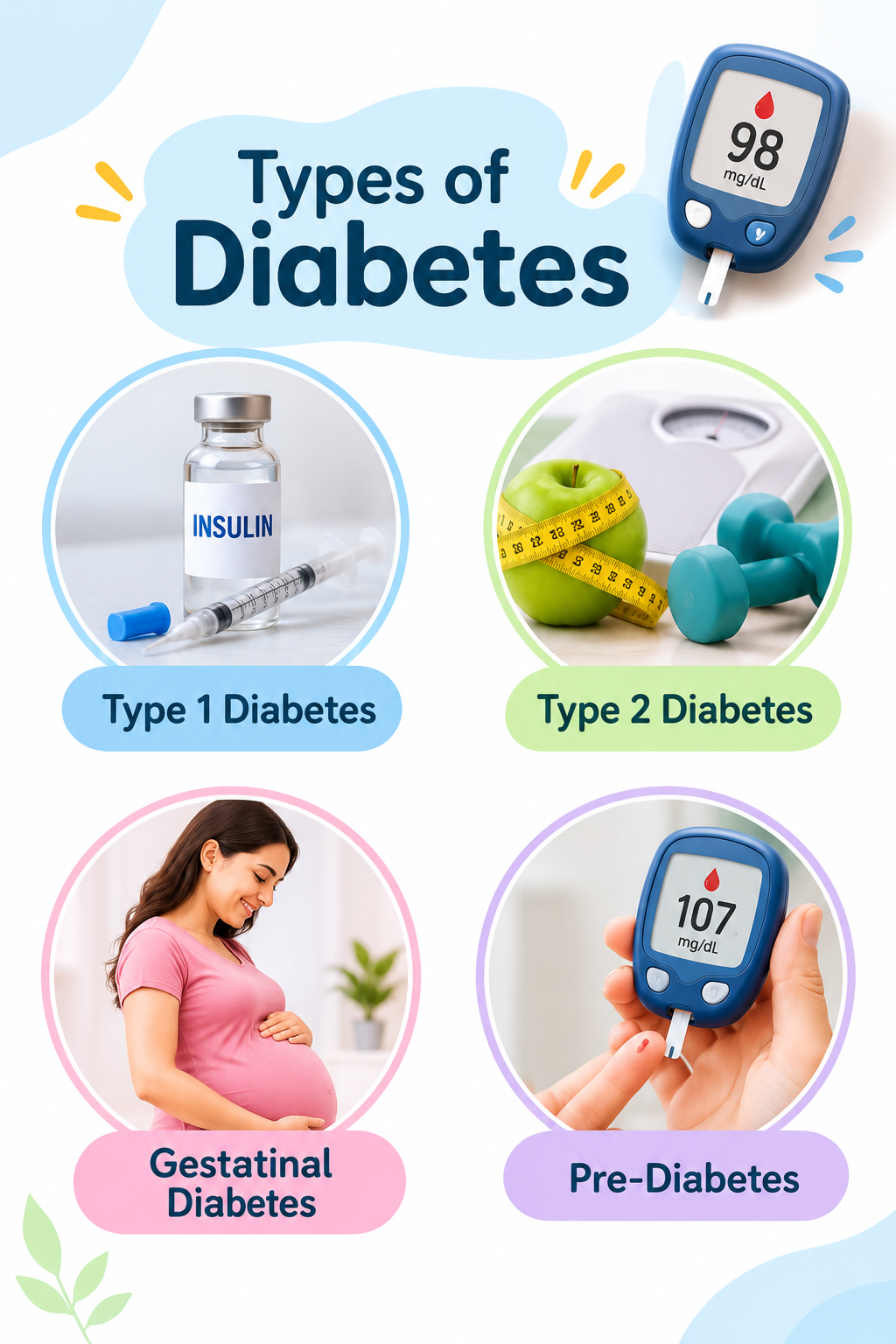
Diabetes is a growing health concern worldwide and is a chronic condition that affects how the body regulates blood sugar (glucose). It occurs when the body does not produce enough insulin or cannot use it effectively. Type 1 Diabetes, Type 2 Diabetes and Gestational Diabetes are the main types, while pre-diabetes indicates higher-than-normal blood sugar levels that require timely attention.
Managing diabetes involves more than monitoring blood sugar levels. Everyday food choices, physical activity and lifestyle habits can influence how the body responds to glucose. A qualified diabetes dietitian can help individuals understand their nutritional requirements and make suitable dietary changes to support better diabetes management.
A personalized diabetes diet plan focuses on balanced meals, appropriate portion sizes, carbohydrate intake and practical food choices. Rather than avoiding several food groups or following restrictive diets, the aim is to develop healthy eating habits that are realistic and sustainable.
The Diet Therapy by Dt. Shweta Shah Panchal, we believe diabetes nutrition should fit into your everyday lifestyle. We provide individualized diet counselling and meal planning for people with Type 1 Diabetes, Type 2 Diabetes, Gestational Diabetes and Pre-Diabetes. Our approach considers individual health needs, food preferences and daily routines, with consultations available at our Malad, Mumbai clinic and online across India.
Types of Diabetes
Diabetes can affect individuals differently depending on its type, underlying causes and health requirements. Understanding these differences is important when planning suitable nutrition and lifestyle changes. Each type may require a different dietary approach, making personalized guidance an important part of diabetes care.
Type 1 Diabetes
Type 1 Diabetes is an autoimmune condition in which the body immune system attacks the insulin-producing cells of the pancreas, resulting in little or no insulin production. It can develop during childhood or adulthood and requires lifelong insulin treatment. Nutrition guidance focuses on understanding carbohydrate intake, balancing meals with insulin requirements and coordinating food choices with physical activity to support blood sugar management.
Type 2 Diabetes
Type 2 Diabetes develops when the body becomes resistant to insulin or does not produce enough insulin to maintain normal blood sugar levels. Food habits, physical activity, genetics and body weight can influence its development and management. A personalized Type 2 Diabetes diet plan can help with portion control, balanced meal planning, healthier food choices and weight management according to individual needs.
Gestational Diabetes
Gestational Diabetes develops during pregnancy when blood sugar levels become higher than normal. It usually improves after childbirth, but it can increase the mother future risk of developing Type 2 Diabetes. Appropriate nutrition during this stage helps manage blood sugar while supporting the nutritional needs of both mother and baby. A pregnancy-specific meal plan should be developed according to individual requirements and medical advice.
Pre-Diabetes
Pre-Diabetes occurs when blood sugar levels are higher than normal but not high enough to meet the criteria for Type 2 Diabetes. It is an important stage for taking preventive action through healthier food choices, regular physical activity and appropriate weight management. Personalized dietary guidance can help individuals make sustainable lifestyle changes and reduce their risk of progressing to Type 2 Diabetes.
Symptoms of Diabetes
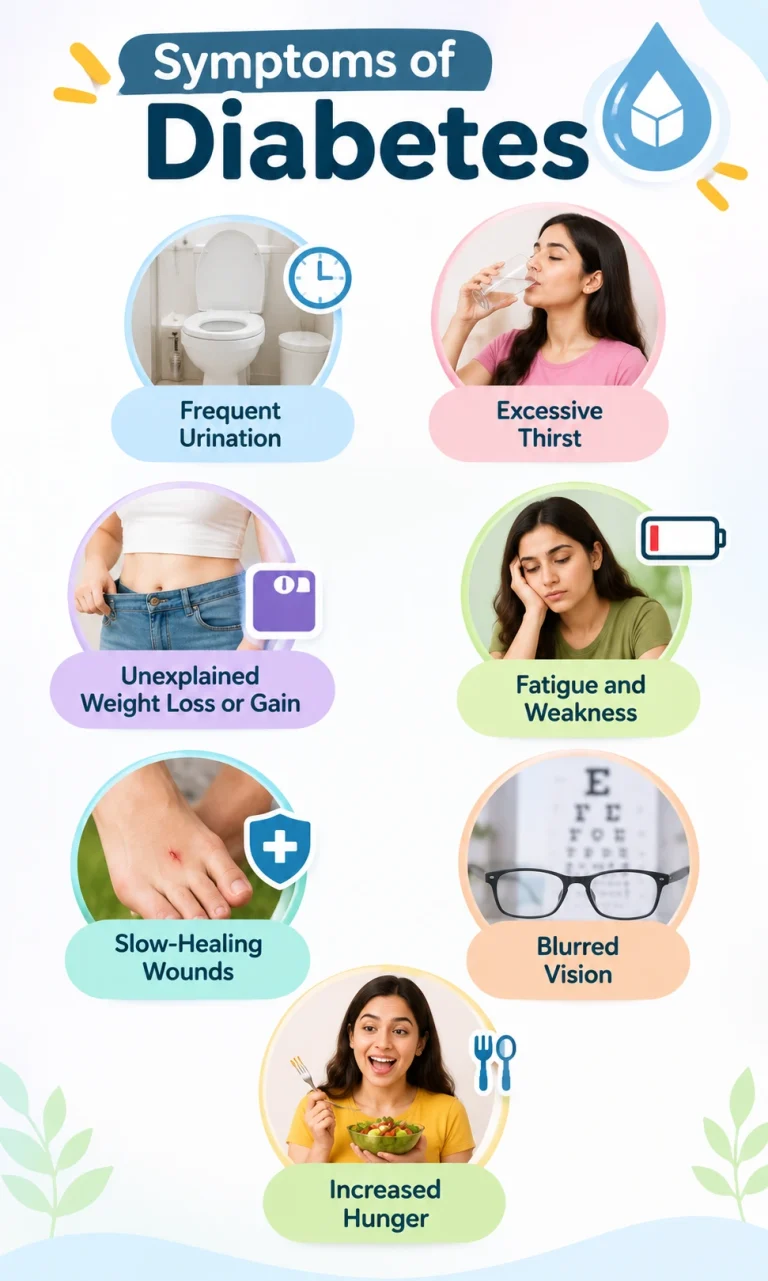
Recognising the early symptoms of diabetes can help people seek medical advice and receive timely treatment. Symptoms may develop gradually or appear more noticeably, depending on the type of diabetes. Some common signs to watch for include:
- Frequent Urination: Passing urine more often than usual, especially during the night, as the body tries to remove excess sugar through urine.
- Excessive Thirst: Feeling unusually thirsty due to fluid loss caused by frequent urination.
- Unexplained Weight Loss: Losing weight without making changes to your diet or physical activity, which can occur when the body cannot use glucose properly.
- Fatigue and Weakness: Feeling tired or low on energy because the body is unable to use glucose effectively.
- Slow-Healing Wounds: Cuts, sores or minor injuries that take longer than usual to heal.
- Blurred Vision: Changes in blood sugar levels can affect the fluid balance in the eyes and temporarily blur vision.
- Increased Hunger: Feeling hungry more often because the body is not using glucose efficiently for energy.
Not everyone experiences the same symptoms, and some people with Type 2 Diabetes may have very mild signs or no noticeable symptoms. If you notice these changes, consult a qualified healthcare professional for proper evaluation and blood sugar testing. Early diagnosis, medical care and suitable nutrition guidance can support better diabetes management.
What Our Clients Say


 Trustindex verifies that the original source of the review is Google.
 Trustindex verifies that the original source of the review is Google.
 Trustindex verifies that the original source of the review is Google.
 Trustindex verifies that the original source of the review is Google.
 Trustindex verifies that the original source of the review is Google.
 Trustindex verifies that the original source of the review is Google.
 Trustindex verifies that the original source of the review is Google.
 Trustindex verifies that the original source of the review is Google.
 Trustindex verifies that the original source of the review is Google.

How The Diet Therapy Can Help You Manage Diabetes
At The Diet Therapy, we understand that every individual has different health needs, food habits and lifestyle routines. That is why we believe a diabetes diet plan should be based on individual requirements rather than following the same diet for everyone. Under the guidance of Dt. Shweta Shah Panchal, we focus on practical nutrition guidance to support better diabetes management.
Our diet plans are prepared by considering your health condition, food preferences, daily routine and nutritional needs. Whether you have Type 1 Diabetes, Type 2 Diabetes, Gestational Diabetes or Pre-Diabetes, our aim is to help you make better food choices, manage portion sizes and build healthy eating habits that are easy to follow.
We also focus on making healthy eating a part of your everyday life. Instead of strict food restrictions, we encourage balanced meals and realistic changes that can be followed over time. Our nutrition guidance is designed to fit your lifestyle, so you can work towards your health goals without giving up the foods you enjoy completely.
At The Diet Therapy, we offer personalised diabetes diet counselling through clinic consultations in Malad, Mumbai, as well as online consultations across India. Connect with our team to understand your nutritional needs and get guidance for your diabetes management journey.
Frequently Asked Questions
1. Can Type 2 Diabetes Be Managed Through Diet and Lifestyle Changes?
Yes, healthy food choices, regular physical activity and weight management can help manage Type 2 Diabetes. Following a suitable diet plan along with medical advice can support better blood sugar control.
2. Can Nutrition Help Manage or Reverse Diabetes?
Proper nutrition plays an important role in diabetes management. In some people with Type 2 Diabetes, sustained lifestyle changes may help achieve remission. Type 1 Diabetes, however, requires lifelong insulin treatment.
3. Which Foods Should Be Avoided in Diabetes?
People with diabetes may need to limit sugary drinks, sweets, highly processed foods and foods high in added sugar. A balanced diet with suitable portion sizes can help support blood sugar management.
4. Can People with Diabetes Eat Rice, Roti and Fruits?
Yes, people with diabetes can include rice, roti and fruits in their diet. The type of food, portion size and overall meal balance are important. A dietitian can help plan suitable meals based on individual needs.
5. Is a Low-Carb Diet Necessary for Diabetes Management?
No, a low-carb diet is not necessary for everyone with diabetes. The right amount of carbohydrates depends on individual health needs, activity levels and treatment. A balanced and personalised diet plan can help.
6. Can a Personalised Diet Plan Help Control Blood Sugar Levels?
A personalised diabetes diet plan can help manage carbohydrate intake, portion sizes and meal timings. It also considers food preferences, daily routines and individual nutritional requirements.
7. What Is the Difference Between Type 1, Type 2 and Gestational Diabetes?
Type 1 Diabetes occurs when the body produces little or no insulin. Type 2 Diabetes develops when the body cannot use insulin properly. Gestational Diabetes develops during pregnancy when blood sugar levels become higher than normal.
8. Can Weight Management Help Improve Type 2 Diabetes?
For people who are overweight, reaching and maintaining a healthy weight may improve insulin sensitivity and support blood sugar management. A suitable diet and lifestyle plan can help achieve gradual, sustainable changes.
9. Can a Dietitian Help with Gestational Diabetes and Pre-Diabetes?
Yes, a qualified dietitian can provide nutrition guidance and meal planning for gestational diabetes and pre-diabetes. The plan is based on individual health needs and should be followed alongside medical advice.
10.Where Can I Find a Diabetes Dietitian in Malad, Mumbai?
The Diet Therapy by Dt. Shweta Shah Panchal offers personalised diabetes diet counselling in Malad, Mumbai. Online consultations are also available for individuals across India. Contact our team to know more about the consultation process.